Plastic use has grown exponentially since mass production began in the 1950s.
Today we produce over 400 million tonnes a year, and it keeps rising.
In total, humanity has manufactured

Plastic is part of daily life.
Useful, cheap, everywhere.
But its scale is harder to grasp.
Scroll to clear the view
Plastic use has grown exponentially since mass production began in the 1950s.
Today we produce over 400 million tonnes a year, and it keeps rising.
In total, humanity has manufactured

Let's break it down.
With 8 billion people on the planet, that’s about
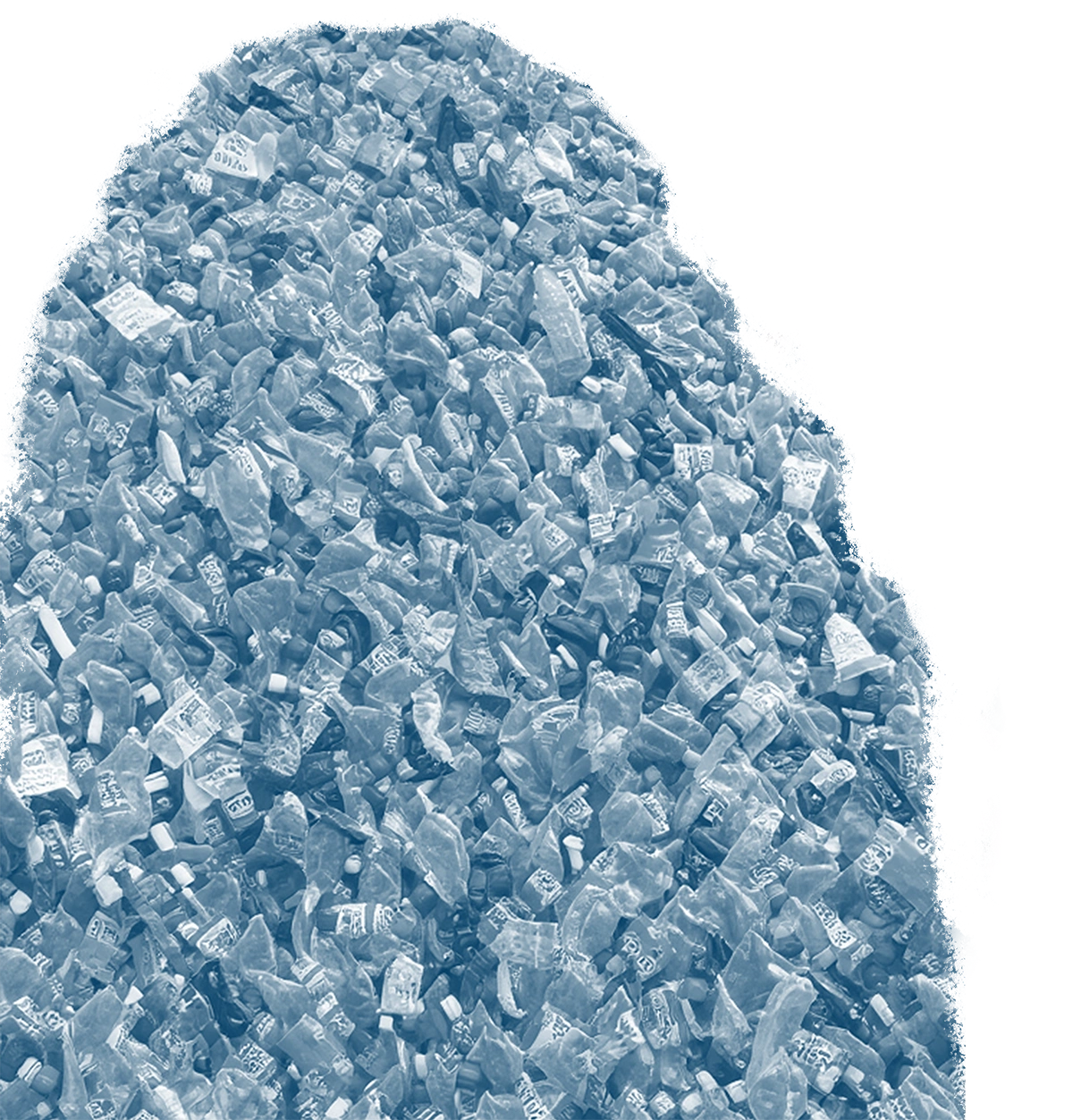
A tonne of loose plastic waste is roughly the weight of a small car. This is
With that amount, you could own:


The current plastics lifecycle is far from circular.
Only 9%. And even then, most plastic can only be recycled once or twice before it degrades too much to be processed again.
Recycling only slows the process of plastic become waste.
Burning plastic releases CO₂ and other greenhouse gases.
Some facilities capture energy from burning plastic, but many don’t. And even the most advanced systems can’t eliminate toxic byproducts entirely.
Where it can sit for hundreds of years...
Plastic doesn't biodegrade, it breaks into tiny fragments: microplastics and nanoplastics. Over time, these particles drift into soil, groundwater and air. Half of all plastic ever made is now sitting in these slow-motion leak points.
This is a euphemism for being dumped, escaping into the environment or burnt informally.
Mismanaged waste is the source of the plastics we see in rivers, on coastlines and drifting across landscapes far from where they were first used.
Rivers act like slow conveyor belts, feeding plastic into the ocean year after year.
Today, an estimated 30 million tonnes of plastic are already in seas and oceans.
Another 100+ million tonnes are trapped in rivers — slowly moving downstream.
Without action, plastic production will grow 70% by 2040 (OECD report, 2024).
Mismanaged waste and environmental leakage will increase by 50%.
This crisis grows faster than
our ability to handle it.
We can't recycle our way out of this problem.
Recycling captures only a fraction of the plastic we create —
and most still ends up burned, buried, or lost.
The real opportunity is elsewhere.
Most plastic packaging is designed to be used once.
Then it disappears from view — but not from the world.
They reduce waste at the source.
They cut emissions.
And they work — when we support them.
The REUSE Foundation exists to accelerate this shift.
Learn more